In Part 1, we introduced the Gaussian distribution as naturally arising from the mixing of a large number of independent random variables. Random mixing has an averaging effect that can be described by a sequence of approximations. As a first order approximation, random mixing reduces the size of fluctuations; asymptotically, the sample average of iid random variables converges to the mean. If we zoom into the small deviations of the mixture around its mean for a second-order approximation, we discover that the deviations converge to a Gaussian. distribution regardless of the distribution of the underlying random variables. This is the famous Central Limit Theorem (CLT).
Once you go Gaussian… In addition to its ubiquity in nature, the popularity of the Gaussian distribution can also be attributed to its many, very nice mathematical properties which makes us want to use these distributions. First and most important, mixtures of independent Gaussian random variables are also Gaussian. From our previous reasoning that led up to the CLT, this should be unsurprising.
Consider a sequence of iid standard Gaussian random variables collected into a column vector ![\underline{Z} \doteq [Z_1, Z_2 \dots Z_M]^T](https://s0.wp.com/latex.php?latex=%5Cunderline%7BZ%7D+%5Cdoteq+%5BZ_1%2C+Z_2+%5Cdots+Z_M%5D%5ET&bg=ffffff&fg=111111&s=0&c=20201002)


![\underline{X} \doteq [X_1, X_2 \dots X_N]^T](https://s0.wp.com/latex.php?latex=%5Cunderline%7BX%7D+%5Cdoteq+%5BX_1%2C+X_2+%5Cdots+X_N%5D%5ET&bg=ffffff&fg=111111&s=0&c=20201002)

Natural Gaussians. By the previous reasoning, the 
We call such random variables
But calling these natural Gaussians begs the question: is there another kind?
Gaussians with .. Unnatural Dependencies. Sometimes the nice mathematical properties of the Gaussian distribution can lead to .. annoying mathematical corner cases. We can take two iid standard Gaussian rvs 

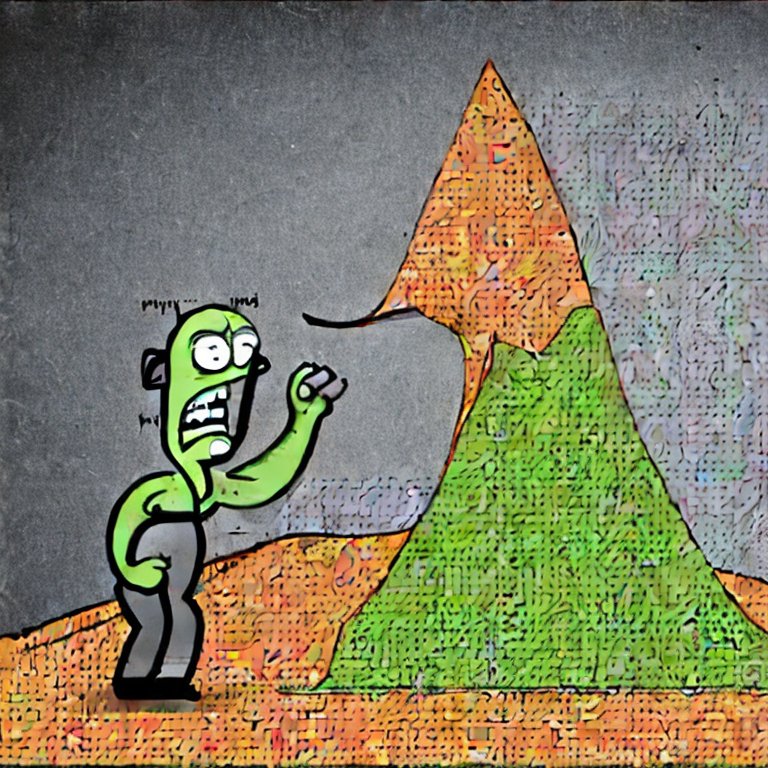
But we can also create weird Frankenstein monster Gaussians like 


While there are numerous ways to cook up this kind of weird Gaussian random variables, they almost never exist in the wild.
If we limit ourselves to the nice kind of multi-variate Gaussians, we can apply some very nice and intuitive geometric ideas to them. That’s a topic for Part 3.
 hawkee
2 thoughts on “The Gaussian distribution — 2: Frankenstein Monsters”